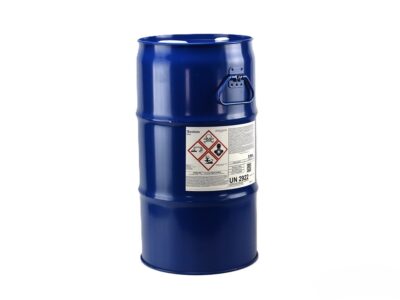
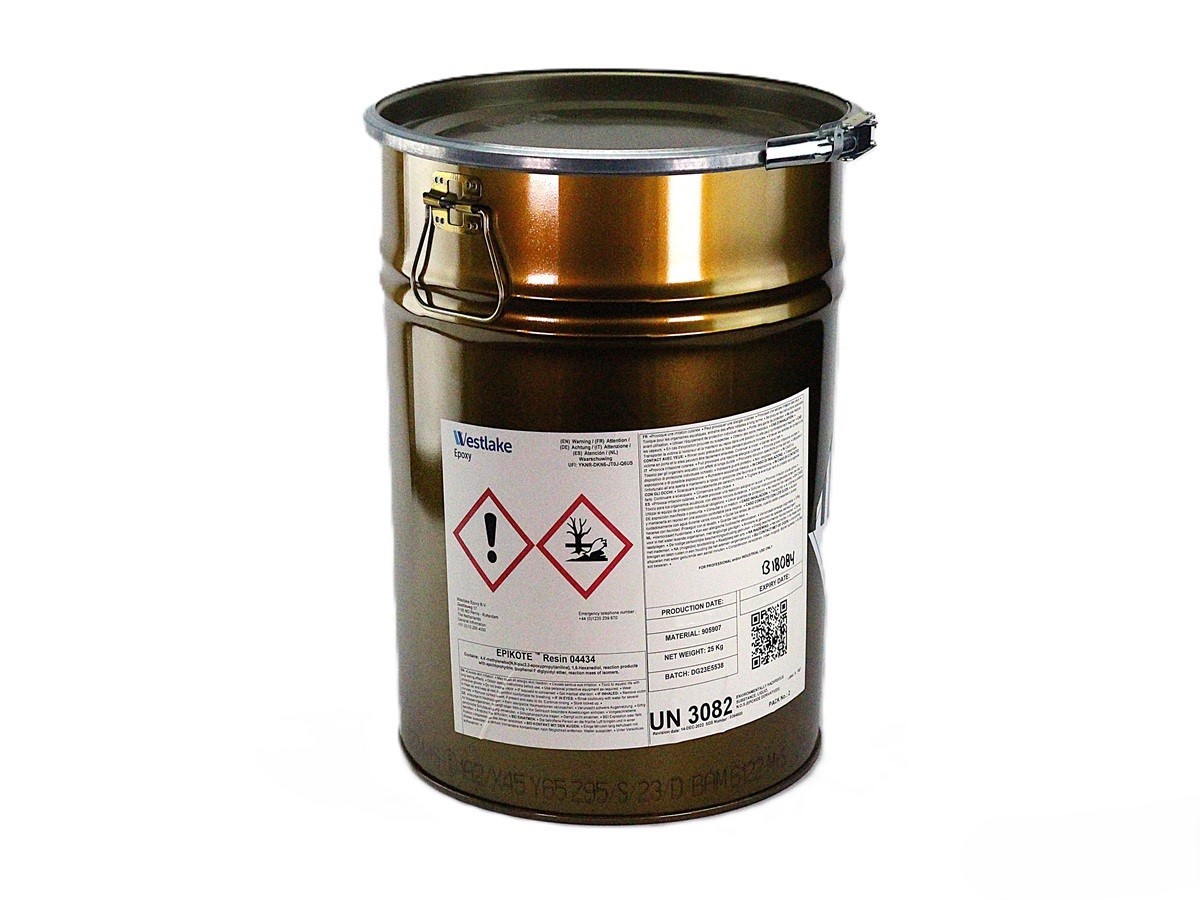
MGS EK Curing Agent 04434 (Metal Pail /net 25 Kg)
| System | |
|---|---|
| Industry | Aerospace & Defense |
| Container Size | Pail |
| Hazardous Good | Yes |
| Dimensions | 11 × 11 × 21 in |
Please Note – To accurately calculate your order total, freight must be evaluated based on size, volume, and hazardous material classification. The delivery information provided in the quote form allows the most cost-effective shipping method to be selected so the order can proceed directly to confirmation and shipment.
EPIKOTE Resin 04434 paired with EPIKURE Curing Agent 04434 is a low-viscous, warm-curing lamination resin based on epoxy resin. It is designed for filament winding applications, providing high thermoforming stability, strength, good hot-wet stability, low exothermic loss, and outstanding chemical resistance.
Application
- This resin system is ideal for applications requiring high thermal and mechanical stability, such as filament winding, composite lamination, and structural components exposed to demanding environments.
Mixing and Preparation
- Mixing Ratio: Combine 100 parts by weight of EPIKOTE™ Resin 04434 with 45 parts by weight of EPIKURE™ Curing Agent 04434.
Application Techniques
Filamat Winding
- Description:Continuous reinforcement fibers, typically impregnated with a resin, are wound around a rotating mandrel.
- Best For: Aerospace and Defense
Processing Temperature
- Recommended Processing Temperature Range: 25°C to 35°C for mixing and application.
- Note : Higher temperatures will reduce pot life. For every 10°C increase, the pot life is reduced by approximately 50%. Avoid large batch mixing at elevated temperatures to prevent excessive exothermic heat buildup.
Curing Process
- Initial Curing: Typical curing cycles include:
- 2 hours at 60°C + 3 hours at 120°C (TG: 130°C)
- 2 hours at 60°C + 1 hour at 170°C (TG: 170°C)
- Curing Agent Compatibility: This product is specifically designed for use with EPIKURE Curing Agent 04434. Using incompatible curing agents may result in incomplete curing or sub optimal performance.
- Post-Curing:Optional post-curing at higher temperatures (up to 200°C) improves thermal stability and mechanical properties.
Data Sheets
- Technical Data Sheet
- Safety Data Sheet